
In the fast-paced world of the automobile industry, managing huge yards packed with thousands of vehicles—each with a unique VIN—is tough. These yards, often covering hundreds of acres, are like giant parking lots for finished or faulty cars. But traditional methods have long struggled to keep up. Enter BLE devices—a game-changing virtual Bluetooth® LE (vBLE) technology that’s transforming how we track and manage vehicles in these massive spaces.
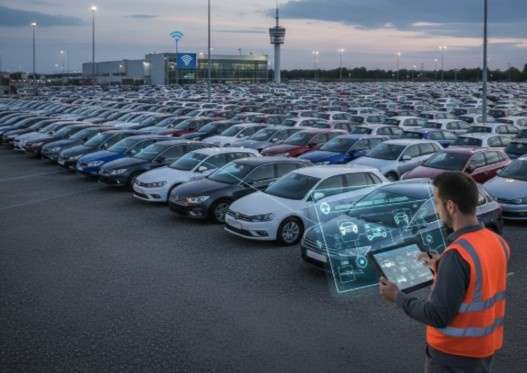
Bluetooth Low Energy (BLE) technology steps in where manual methods falter, offering a low-power, wireless tracking solution for asset visibility. Smart IoT products, like ble tags or beacons attached to vehicles, communicate with BLE gateways or apps to pinpoint locations accurately. Here’s why they’re ideal, especially in those sprawling 100-acre yards where VIN-based manual tracking falls short:

BLE power consumption allows tags to last years on a single battery, making them practical for outdoor yards without constant recharging. Unlike GPS, which drains power quickly, BLE uses proximity-based signals to map vehicle positions via fixed readers or mobile scanners. This is crucial in vast spaces where manually cross-referencing VINs is impractical—bluetooth tags automates the process, reducing search times from minutes to seconds.

By tagging vehicles with Bluetooth beacons, yard managers get instant updates on locations, status (e.g., finished vs. rejected), and even environmental data like temperature for sensitive cargo. In automotive dealerships or factories, solutions like Lansitec’s B-Mobile system pair BLE with apps and LoRaWAN networks for precise tracking of cars and keys, cutting down on lost time and errors.

Virtual BLE are affordable and easy to deploy, fitting everything from individual cars to entire fleets. In the automotive industry, this means better inventory management, with systems flagging aged vehicles (those sitting over 45 days) to prevent stock buildup.
But BLE beacon tag isn’t just about basics—it’s evolving with IoT integrations for predictive analytics, like forecasting yard congestion or automating dispatch queues.


Automobile yards are the backbone of manufacturing and distribution, but they’re riddled with inefficiencies. A factory in India churning out hundreds of vehicles daily, parking them in a yard the size of a small town. Workers rely on manual logs, spreadsheets, or even walkie-talkies to locate a specific car by its VIN. This old-school approach leads to significant headaches:
In yards covering 100+ acres, manual handling is incredibly difficult. Finding one vehicle among thousands can take 20 minutes or more per search, leading to hours of lost productivity daily. For instance, in a typical Indian plant handling over 7,000 vehicles monthly, these delays cause backups in dispatching and rework for rejected units.
Poor visibility leads to “missing” vehicles—misplaced or forgotten in the chaos. In India, discrepancies of up to 300,000 unsold cars have been reported, tying up billions in capital and skewing sales plan.
Harsh conditions like monsoons or extreme heat make physical searches difficult for workers. Add in the need to shuffle vehicles around, and you risk damage, errors in shipments, or even safety issues.
Teams of 2–3 workers per shift hunt for vehicles, leading to errors like wrong shipments. Finding a rejected vehicle for rework can take hours, delaying production and deliveries.
Extended wait times for trailers and excess inventory rack up costs. In India, inefficiencies contribute to losses worth tens of thousands of crores annually, including loan interest for overstocked dealers.
Without automated tracking, there’s no instant insight into vehicle locations or statuses (e.g., finished vs. rejected). This makes it hard to spot aged stock or optimize dispatch schedules.
Automobile yards are the backbone of manufacturing and distribution, but they’re riddled with inefficiencies. A factory in India churning out hundreds of vehicles daily, parking them in a yard the size of a small town. Workers rely on manual logs, spreadsheets, or even walkie-talkies to locate a specific car by its VIN. This old-school approach leads to significant headaches:
In yards covering 100+ acres, manual handling is incredibly difficult. Finding one vehicle among thousands can take 20 minutes or more per search, leading to hours of lost productivity daily. For instance, in a typical Indian plant handling over 7,000 vehicles monthly, these delays cause backups in dispatching and rework for rejected units.
Poor visibility leads to “missing” vehicles—misplaced or forgotten in the chaos. In India, discrepancies of up to 300,000 unsold cars have been reported, tying up billions in capital and skewing sales plan.
Harsh conditions like monsoons or extreme heat make physical searches difficult for workers. Add in the need to shuffle vehicles around, and you risk damage, errors in shipments, or even safety issues.
Teams of 2–3 workers per shift hunt for vehicles, leading to errors like wrong shipments. Finding a rejected vehicle for rework can take hours, delaying production and deliveries.
Extended wait times for trailers and excess inventory rack up costs. In India, inefficiencies contribute to losses worth tens of thousands of crores annually, including loan interest for overstocked dealers.
Without automated tracking, there’s no instant insight into vehicle locations or statuses (e.g., finished vs. rejected). This makes it hard to spot aged stock or optimize dispatch schedules.
IoT BLE can alert managers to unauthorized movements for comprehensive Real-Time Location Systems (RTLS). This is vital in high-value yards where vehicle theft or tampering is a risk.
Paired with Yard Management Systems (YMS), sensormatic tags provides analytics on fuel consumption, vehicle dwell times, and workflow bottlenecks. For example, customizing cars in outdoor yards becomes smoother with real-time data on parts and assembly status.
Beacon Low-energy design reduces electronic waste and power usage, aligning with green initiatives in the auto sector.
In India, where the vehicle tracking market is projected to hit USD 2.5 billion by 2033, BLE is accelerating adoption amid rapid industry growth.
The automobile industry is racing toward automation, and Bluetooth Low Energy (BLE) devices are leading the charge. These tiny, smart tags are transforming messy vehicle yards into smooth, efficient operations. Here’s how, in simple terms: