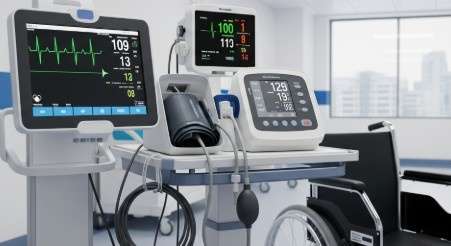



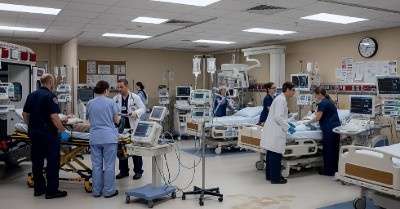
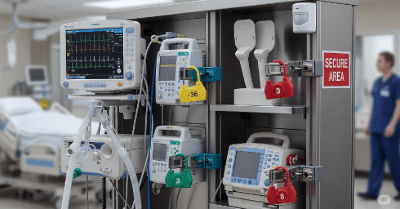
A typical large hospital has a variety of critical equipments scattered across multiple buildings and at different floors. The hospital relies on critical equipment like infusion pumps, wheelchairs, and diagnostic machines to deliver patient care. Bluetooth-based asset tracking ensures these assets are readily available, reducing delays and improving operational efficiency.
Beacons: Attached to medical devices, bluetooth beacons transmit signals to track their location within the hospital, ensuring quick access during emergencies — this forms the backbone of our healthcare asset tracking and real time patient monitoring system.
Gateways: Installed in hospital corridors or wards, BLE gateways collect beacon data and integrate it with hospital management systems, providing staff with real-time asset location information for better hospital inventory tracking and hospital inventory management.
BLE beacons attached to hospital equipment (like wheelchairs, IV pumps, monitors) analyse real-time location tracking data on your devices via iot gateway, ensuring instant access during emergencies. Staff can locate critical items easily, supporting hospital equipment management and asset visibility in hospital campus.
By tracking medical devices and patient-worn tags, the system supports a patient tracking system in hospital environment. This helps optimize patient flow, reduce wait times, and improve throughput — a true real time patient monitoring system.
BLE systems integrate with staff ID cards or wearable tags, enabling worker tracking and personnel tracking across departments. This improves staff efficiency and enhances coordination, which is crucial for hospital inventory management systems.
With geofencing and automated alerts, BLE asset trackers prevent equipment from being misused or going missing, reinforcing hospital inventory tracking and helping safeguard high-value assets. This virtual BLE power also supports asset tracking in healthcare to minimize losses.
BLE beacons attached to hospital equipment (like wheelchairs, IV pumps, monitors) analyse real-time location tracking data on your devices via iot gateway, ensuring instant access during emergencies. Staff can locate critical items easily, supporting hospital equipment management and asset visibility in hospital campus.
By tracking medical devices and patient-worn tags, the system supports a patient tracking system in hospital environment. This helps optimize patient flow, reduce wait times, and improve throughput — a true real time patient monitoring system.
BLE systems integrate with staff ID cards or wearable tags, enabling worker tracking and personnel tracking across departments. This improves staff efficiency and enhances coordination, which is crucial for hospital inventory management systems.
With geofencing and automated alerts, BLE asset trackers prevent equipment from being misused or going missing, reinforcing hospital inventory tracking and helping safeguard high-value assets. This virtual BLE power also supports asset tracking in healthcare to minimize losses.
Syncs real-time data of critical equipment like infusion pumps or ventilators is available, reducing delays in treatment.
Tracks maintenance and sterilization schedules, ensuring devices meet health standards.
Bluetooth’s accuracy allows precise tracking in multi-floor hospitals where GPS is unreliable.
For example,
a hospital can use smart iot products to locate wheelchairs or portable ultrasound machines instantly, reducing search time for staff. Beacon Gateways ensure coverage across multiple floors, updating asset locations in real time. Point-to-point communication allows technicians to connect directly to devices for maintenance, ensuring equipment reliability and compliance with health regulations.